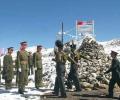
The Indian delegation led by Lt General Harinder Singh, the general officer commanding of Leh-based 14 Corps, and Commander of the Tibet Military District Maj Gen Liu Lin held an extensive meeting in Maldo on the Chinese side of the Line of Actual Control in eastern Ladakh on Saturday that began at around 11.30 am and went on till evening.
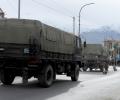
China is in no hurry to disengage at the border and the region and international community is moving on. The spectre of a long haul in Ladakh haunts India, points out Ambassador M K Bhadrakumar.

India on Friday pressed Indonesia to speedily ratification an extradition treaty, with Prime Minister Manmohan Singh saying the two countries would frame a comprehensive action plan for mutually beneficial security cooperation.

In the opinion piece after the summit, the leaders said the cooperation, known as "the Quad," was born in crisis. It became a diplomatic dialogue in 2007 and was reborn in 2017.

'The Indian version is that the two top diplomats merely exchanged pleasantries, while the Pakistani side characterised the encounter as an 'informal dialogue'.' 'The truth, as always in such piquant situations, is somewhere in between.' 'It stands to reason that ice has been broken,' says Ambassador M K Bhadrakumar.
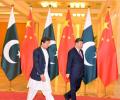
Both leaders also exchanged views on the situations in South Asia, an official Chinese statement said about the meeting between Xi and Khan.

Leaders of the two countries, however, did discuss on Pakistan's nuclear safety and security which is an ongoing discussion.
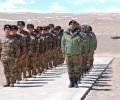
The sources said both sides held extensive deliberations on modalities for disengagement of troops from all the friction points in eastern Ladakh at the talks.

'The US wants Modi to succeed because we want India to succeed. For our part, when India thinks of its partners in the world, we want it to think of the US first. That means positioning our country as the preferred provider of the key inputs that can help to propel India's rise.' 'The meeting between Modi and Obama is, and must be, an opportunity for true strategic dialogue -- not a scripted exchange of talking points, but an open discussion of the big questions. What kind of world do we want to live in? What are our true priorities? And most importantly, why does this partnership still matter?'

The Indian armed forces, especially the Navy, are building partnerships in the Indo-Pacific region for peace and security, as well as humanitarian assistance and disaster relief, he said.

Thimpu apparently didn't think it necessary to take Delhi into confidence. Bhutan is loathe to getting dragged into the geopolitical rivalry between India and China. And for Beijing, this was too good an opportunity to be missed to thumb its nose at the powers-that-be in Delhi, points out Ambassador M K Bhadrakumar.

'India alone cannot walk the path of peace. It also has to be Pakistan's journey to make,' says Prime Minister Narendra Modi at the government's geo-political flagship initiative "Raisina Dialogue-II".
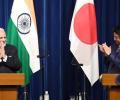
'Relations between India and Japan are robust and devoid of either shadow of history or any irritant.' 'In fact, there is plenty of warmth and goodwill earned over history. There are no negatives but only opportunities,' notes Dr Rajaram Panda.
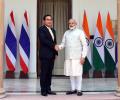
Thailand's importance to India's Act East policy is too significant to be overlooked.

Modi held comprehensive talks with Singapore Prime Minister Lee Hsien Loong on ways to enhance cooperation in key sectors including trade and investment.

Prime Minister Narendra Modi on Monday left for home after wrapping up his eight-day whirlwind tour of five Central Asian countries and Russia during which ties with these nations were strengthened and India was accepted as a full member of the SCO.
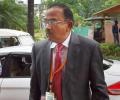
Amid the Sikkim standoff, National Security Advisor Ajit Doval on Thursday held talks with his Chinese Counterpart and State Councillor Yang Jiechi on the sidelines of the BRICS NSAs meeting.

Terrorism and Afghanistan were the focus points of Prime Minister Narendra Modi's talks with Uzbek President Islam Karimov on his first visit to Central Asia.

Since the change in administration in the US, Indian leaders have publicly and privately identified with American objectives in Afghanistan.
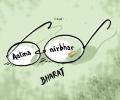
India's shift towards US companies for technology investments and partnerships fits well with the present government's 'Atmanirbhar Bharat' and 'Make in India' initiatives, say experts.

Against the backdrop of the standoff between Indian and Chinese troops in eastern Ladakh, the White House press secy said the United States was closely monitoring the current situation and supports its peaceful resolution.
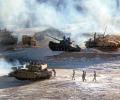
India's national security strategy needs to be revised periodically since the global and regional geopolitical situation is dynamic, points out Commodore Venugopal Menon (retd).

"For several months, we've been working with President (Donald) Trump's transition and governance teams and leaders in Congress providing information on our many programmes and potential business opportunities-including the proposed sale of F-16 fighter aircraft to India," a Lockheed official said.

"This will be the first dinner for a foreign dignitary at the White House under this administration. So, we think that's very significant," a senior administration official told reporters at the White House on the eve of Modi's arrival.

An MoU on sharing hydrological information of the Brahmaputra River by China to India and another pact on amendment of the protocol on phytosanitary requirements for exporting rice from India to China to include non-Basmati rice were signed after the Modi-Xi talks in the eastern Chinese port city.

PM indirectly referred to North Korea's proliferation linkages with Pakistan.
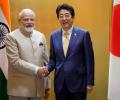
With the signing of the pact, the Quad grouping of India, Japan, Australia and the US is set to gain more heft now, notes Dr Rajaram Panda.

Setting aside the recent tumult in relations caused by the Khobragade episode, US Deputy Secretary of State Heather Higginbottom attended the first major event India's new Ambassador Dr S Jaishankar hosted in Washington. Rediff.com's Aziz Haniffa reports from the Republic Day celebration in the US capital.
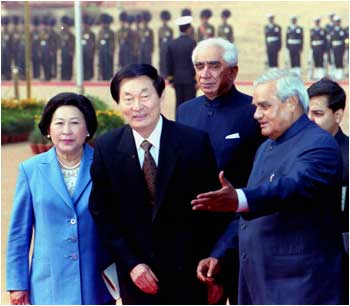
'He knew that a regime which believes that power flows from the barrel of the gun can only be handled from a position of comprehensive strength and not from a position of vulnerability and weakness,' says Rup Narayan Das.

This is the joint statement issued by the ministry of external affairs on the visit of US President Barack Obama to India.

The tour is aimed at boosting India's economic engagement with these nations and inviting more investment.

She says her priority areas would be military preparedness, defence indigenisation, and the welfare of soldiers.

The prime minister's meetings with Abe and Turnbull came a day after he held "very expansive" talks with US President Donald Trump on intensifying overall security and defence cooperation, particularly in the Indo-Pacific region where China is strengthening its military build up.

Just like China wants Trump to lose the US presidential poll, it may want Modi to lose the Lok Sabha polls. So months before the 2024 elections, China may take possession of an important area, say one of the Char Dhams, warns Sanjeev Nayyar.
Hua also said China is ready to hold talks with India to resolve differences on CPEC.
'It's the first-ever US presidential visit which is specially planned for India.' 'The standalone visit itself has achieved something already. Don't underestimate it.' Sheela Bhatt gives us an exclusive glimpse of what the Modi government hopes to achieve from Trump's visit.

Ahead of his talks with the Emirati leadership, Prime Minister Narendra Modi has said the Gulf region is vital for India's economic, energy and security interests.
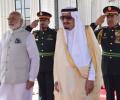
India's ties with Saudi Arabia have been on an upswing over the last two decades based on burgeoning energy ties. Both sides are keen on expanding the economic ties in a range of areas besides the oil sector.

Prime Minister Manmohan Singh has said that commitment by Indian and Chinese leaderships to maintain peace and tranquillity at borders pending boundary settlement is an important guarantor for further progress in Sino-Indian ties, particularly growth of 2.5 billion people.

Had India agreed to join the trade pact, Indian markets would have been flooded with cheap Chinese products.
 © 2026 Rediff.com - Advertise with us - Disclaimer - Privacy Policy - Sitemap - Feedback - About us - Terms of use - Grievances